
Making French Dip Sandwiches: More Fun Than You’d Think
Hey there, friend. If you’re anything like me, you get a little giddy when the kitchen smells like Sunday dinner, even if it’s only Wednesday. French dip sandwiches kinda became my accidental specialty during winter lockdowns – you know, when ‘what’s for dinner?’ was the day’s main event, and I was dangerously close to just making pancakes for every meal. But the first time I made these French dips in my ancient (but trusty) slow cooker, the whole house smelled so good our neighbor commented through the window; apparently, it wafted outside. Not kidding, I almost started charging admission.
Why Do I Keep Coming Back to This Recipe?
I make these tender French dip sandwiches when I want a dinner with minimal fuss that turns my family into sandwich-crazed goblins. My partner always pretends to help with the dishes just to sneak seconds (or thirds) while our youngest just eats the meat plain—no bun, slightly concerning but, hey, protein is protein. Side note: once, I ran out of buns and piled it all on thick toast. Not the same, but nobody complained (too much).
One tricky bit used to be the meat getting all dry, but the slow cooker is basically magic—you just throw everything in and let it do its thing. On lazy days, I don’t even bother skimming the fat. Shh, don’t tell my mom.
So, What Goes In? (Here’s How I Do It… Most Days)
- About 3 pounds of chuck roast (but I’ve swapped in brisket in a pinch, or honestly, whatever beef roast is on sale)
- 1 large yellow onion, sliced (my grandma insists on sweet onions, but regular ones work fine)
- 2–3 garlic cloves, smashed—not minced, unless you’re feeling fancy
- 2 cups beef broth (I’ve used a bouillon cube and hot water more times than I’d admit)
- 1/4 cup soy sauce (tamari or coconut aminos if you want it gluten free or just, you know, ran out)
- 1 tablespoon Worcestershire sauce (no substitution here for me, but apparently some folks use steak sauce)
- 2 teaspoons dried thyme (fresh is nice, but dried’s what I always have on hand)
- 1 teaspoon black pepper (no need to be too precise)
- 1 bay leaf (if you forget, nobody notices)
- Sub rolls or hoagie rolls, split—sourdough is great if you have it, and, yes, hot dog buns work in an emergency
- A handful of shredded Swiss or provolone cheese (my spouse likes cheddar but I say stick to the classics)
- Optional: a splash of red wine, if you’re feeling a bit bold
How I Throw It Together (Honestly, It’s Kind of Foolproof)
- Plop your beef in the slow cooker. (Don’t fuss if it’s a tight fit. Just cram it in.)
- Toss in the sliced onions and smashed garlic.
- Pour in beef broth, soy sauce, Worcestershire, and, optionally, that splash of wine. Sprinkle with thyme, black pepper, and the bay leaf.
- Turn the slow cooker on low and ignore it for 8 hours (you could do high for 4–5 if you’re impatient, but low is more tender).
- About halfway through, I usually sneak the lid off for a peek—don’t do this, it really does slow things down. But, I do it every time anyway.
- Once the beef is so tender that it can be shredded with a fork, pull it out. Shred it right in the cooker or on a cutting board (whichever makes less mess). Return it to the juices for a soak.
- Slice your rolls and toast them lightly, if you fancy. I like a little crunch, personally.
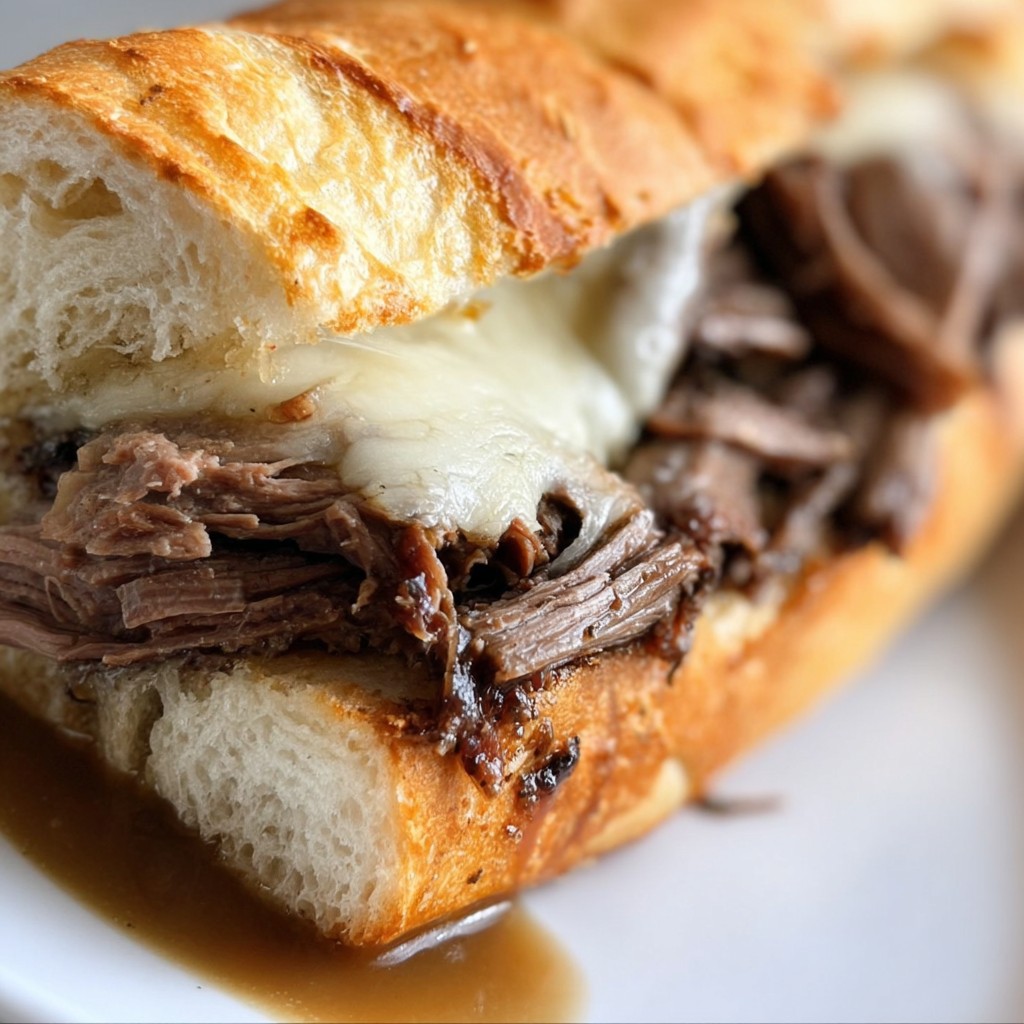
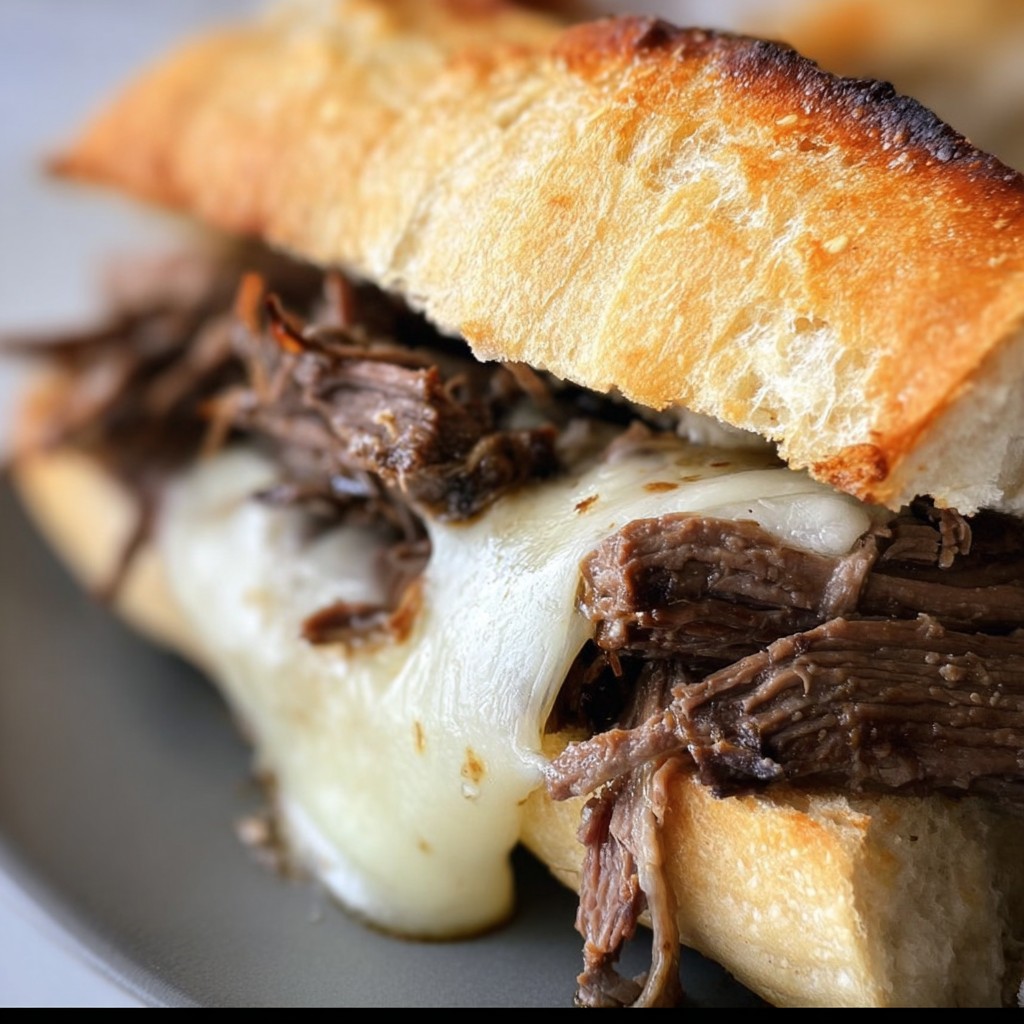
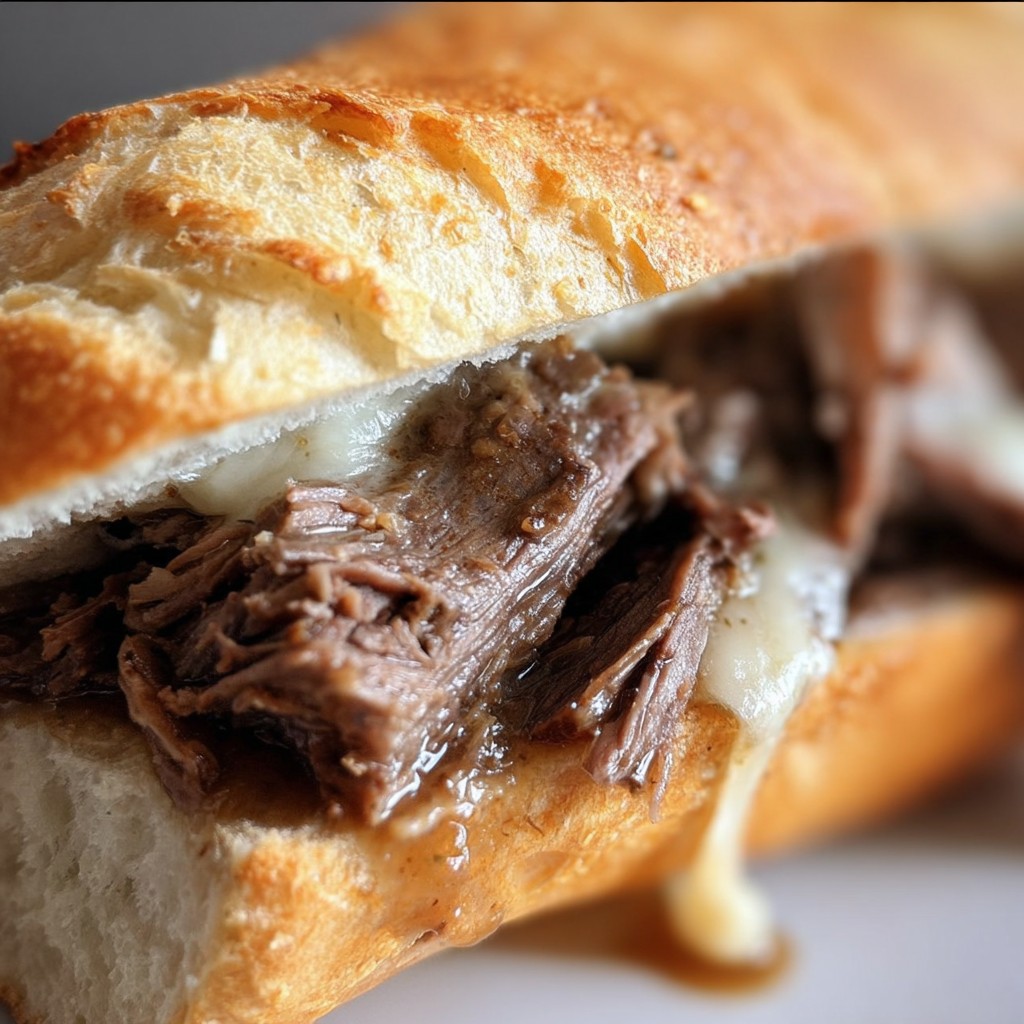
- Pile hot beef and onions onto the rolls, add your cheese, and let it melt. (Microwave for a few seconds if you want melty cheese in a hurry.)
- Strain the cooking juice—that’s your au jus—into bowls for dipping. Skim fat… or don’t, depending on your mood.
Notes I Learned the Hard Way
- If you use too lean a cut, the meat gets stringy and sad. Stick with chuck or brisket for best results.
- You can leave the bay leaf out. I’ve forgotten more times than I can count—never tasted the difference.
- Sometimes I forget to toast the rolls; not a deal breaker, but toasted is better.
- Good cheese isn’t essential. My friend Meg puts Laughing Cow on hers—don’t ask me, but she swears by it!
Variations & Past Experiments (Some Good, Some Less So)
- I’ve gone heavy on the red wine for a ‘Frenchier’ dip. Tasted fine, but maybe a little too rich for my crew.
- Once tried with leftover holiday ham instead of beef. Regret. Stick with beef, trust me.
- A neighbor adds pepperoncini for some tang. I tried it – not really my bag, but maybe you’ll like it?
Do You Really Need Special Equipment?
Obviously, a slow cooker makes this a doddle, but you can do it in a big Dutch oven on low in the oven if you want (I’d check every couple hours to make sure it’s not drying out). In a real pinch, one of those big stockpots will do; you’ll just need to babysit more. I know folks who use the Instant Pot on ‘slow cook’ mode, but honestly, mine just isn’t the same.
How Do You Store the Leftovers? (If You Have Any…)
This stuff keeps in the fridge, tightly covered, for 3–4 days (though honestly, it never survives more than a day in my house!). The meat tastes even beefier the next day. If you freeze it, do it with the juices or it’ll dry out. Reheat gently, or you’ll be chewing shoe leather.
Serving Suggestions (And My Favorite Sidekick)
We usually make a quick coleslaw for crunch, or just open a bag of chips if I can’t be bothered. My brother claims dipping fries in the au jus is “life changing” – which I think is an overstatement, but it’s good. On rainy days, I swear this with a mug of beefy broth just about cures the blues. And, not a rule or anything, but sometimes I’ll add a pickle spear on the side because…well, why not?
Pro Tips – Lessons Learned the Oops Way
- Don’t rush the slow cooker on high unless you absolutely must. I once did – beef was tough as an old boot.
- Actually, I find it works better if you shred the beef in the juices and then let it sit another ten minutes—flavor goes right in.
- And use tongs to fish out the beef. Ladles just make a mess of your rolls, trust me.
Your Questions, Answered (Or, I’ll Try…)
- Q: Can I make this gluten free? Oh yeah, just check your soy sauce (use tamari), and grab gluten free rolls—easy peasy.
- Q: What if I don’t have Worcestershire? You can skip it—maybe add a splosh of steak sauce, or a bit more soy. Or just leave it out; honestly, sometimes I do.
- Q: Can I prep this the night before? Absolutely. Toss everything but the broth in the slow cooker bowl, pop it in the fridge, then just dump in the broth and switch it on in the morning. Works a charm.
- Q: Is it really better the next day? I reckon so. The flavors cozy up together overnight. But—see point above—we rarely have leftovers anyway!
On a final, slightly random note, if you’re keen to geek out on sandwich history, Saveur has a fun read on the origins of the French dip. For slow cooker recommendations, Serious Eats put some through their paces. Hope these help, but don’t get too bogged down researching—you’ll want to get this beef going ASAP!
Anyway, let me know how it goes: I’m curious if your family is as sandwich-obsessed as mine. Bon appétit—or, you know, just dig in!
Ingredients
- 3 pounds beef chuck roast
- 1 teaspoon salt
- 1/2 teaspoon freshly ground black pepper
- 1 medium onion, thinly sliced
- 3 cloves garlic, minced
- 2 cups beef broth
- 1 tablespoon Worcestershire sauce
- 6 hoagie rolls or French sandwich rolls
- 6 slices provolone cheese (optional)
Instructions
-
1Season the beef chuck roast with salt and black pepper on all sides.
-
2Place the sliced onion and minced garlic at the bottom of a slow cooker. Set the seasoned beef on top.
-
3Pour the beef broth and Worcestershire sauce over the beef. Cover and cook on low for 7 hours, or until the meat is very tender and shreds easily.
-
4Remove the beef from the slow cooker and shred with two forks. Skim excess fat from the cooking liquid to create the au jus.
-
5Split the hoagie rolls, add shredded beef (and provolone cheese if desired), then ladle some au jus into small bowls for dipping. Serve immediately.
Approximate Information for One Serving
Nutrition Disclaimers
Number of total servings shown is approximate. Actual number of servings will depend on your preferred portion sizes.
Nutritional values shown are general guidelines and reflect information for 1 serving using the ingredients listed, not including any optional ingredients. Actual macros may vary slightly depending on specific brands and types of ingredients used.
To determine the weight of one serving, prepare the recipe as instructed. Weigh the finished recipe, then divide the weight of the finished recipe (not including the weight of the container the food is in) by the desired number of servings. Result will be the weight of one serving.
Did you make this recipe?
Please consider Pinning it!!


Leave a Comment